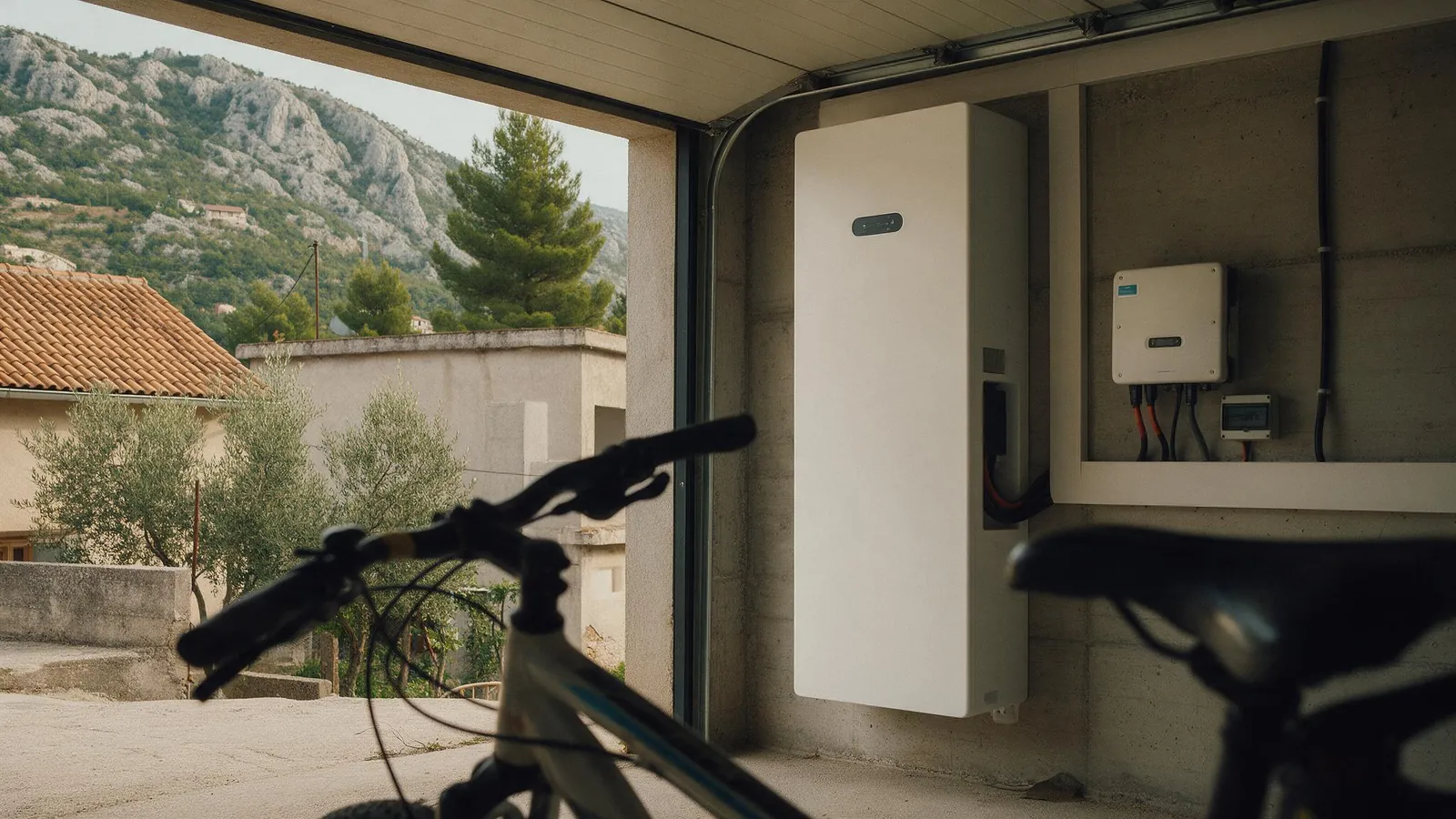
A battery is the most-requested addition and the most misunderstood. It makes no new energy. All it does is keep a kilowatt-hour you would have exported at a lower rate until the evening, when you would otherwise buy it at full price. Its value is exactly that gap — no more.
What our model shows
For a typical Sarajevo house with a 120 KM monthly bill, a 6 kW system without storage pays back in about 14.6 years. The same system with a 10 kWh battery lifts self-consumption from 65% to about 94% — but payback stretches to roughly 22 years, because the pack costs more than the saving it unlocks.
This is not an argument against batteries
It is an argument against buying one to save money. If your supply cuts out often, if you run equipment that must not stop, or if the rules on surplus get worse — a battery makes sense. The reason is just backup, not payback.When a battery does pay
- When surplus is credited at little or nothing — not today's situation, but the direction rules in the region are moving.
- When you have heavy evening load: a heat pump, EV charging, a water heater running at night.
- When an outage costs money — cold storage, a server, milking equipment, an automated greenhouse.
- When your connection capacity caps the system size, so using the existing one better is the only lever left.
- Battery price per kWh
- 900 KM
- Effective cycles a year
- 250
- Battery replaced in year
- 13
Values are read straight out of the calculator's model.
The calculator lets you switch a battery on and see both figures side by side, including the cost of replacing the pack inside the 25-year horizon — because a lithium pack does not last as long as the panels do.