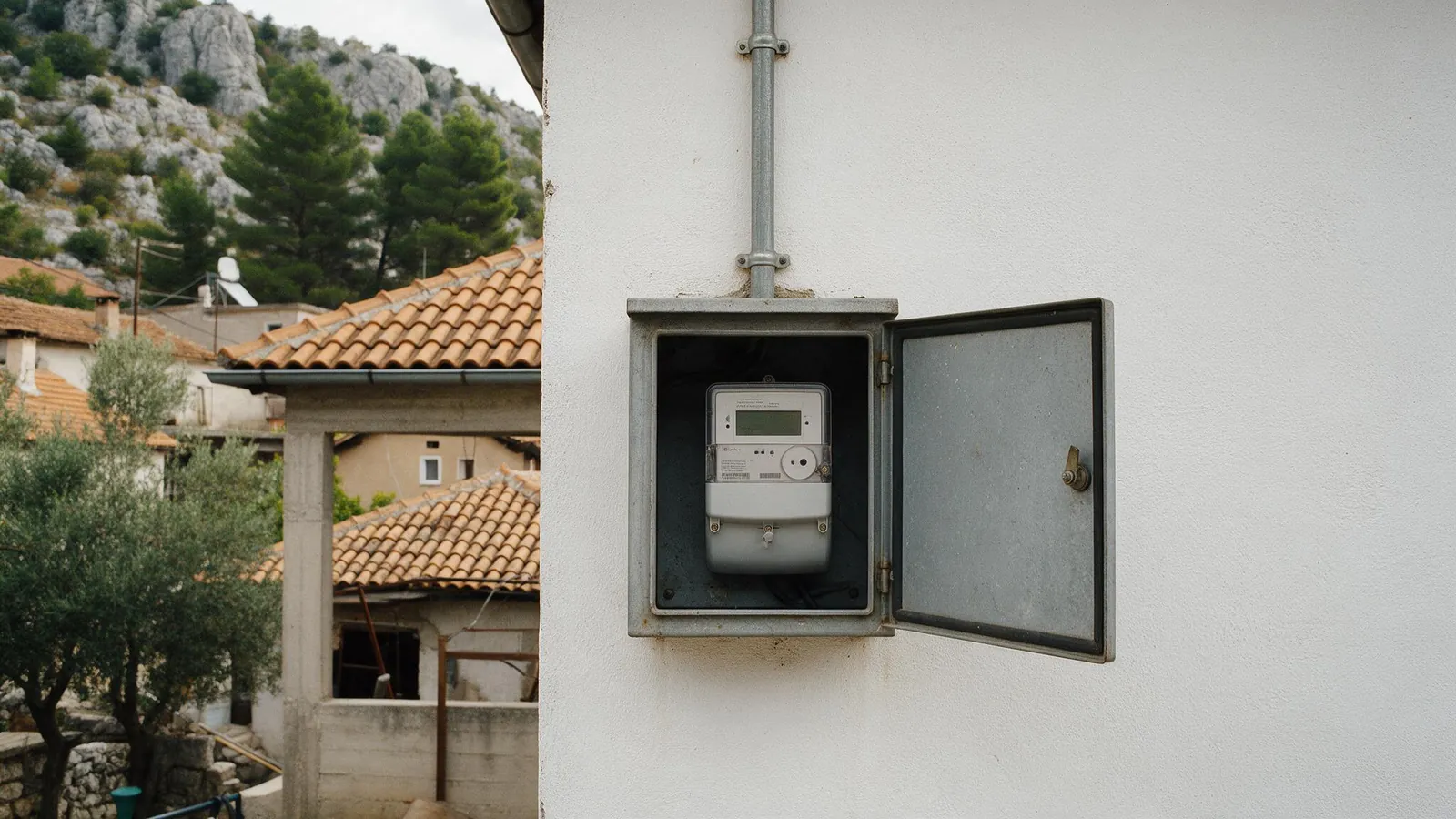
A rooftop system almost never produces exactly what the house is using at that moment. Around midday it produces more than you consume; in the evening, nothing. Everything that happens to that difference is governed by the prosumer rules — and that, far more than the price of panels, decides whether a bigger or a smaller system pays.
Energy credit and monetary credit
The FBiH prosumer rulebook (Službene novine FBiH 30/24) distinguishes two mechanisms. Under an energy credit the surplus carries into the next billing period in kWh — power you exported in summer comes back as power in winter. Under a monetary credit the surplus is converted into money.
The 10% reduction
For a monetary credit in FBiH, the rulebook computes the value of exported energy at the applicable tariff reduced by 10%. In other words: a kilowatt-hour you export is worth less than one you use yourself. That gap is the entire economic reason self-consumption matters.Why this decides your system size
If surplus is credited below the price of the power you buy, every kilowatt-hour you produce but don't use is worth less. A system matched to your actual consumption pays back faster than one oversized to 'fill the roof'. That is why our calculator values self-consumed and exported energy separately rather than at one blended price.
- Self-consumption share
- 65%
- Surplus credited at
- 60%
- Electricity price
- 0.17 KM
Values are read straight out of the calculator's model.
What to check with your distributor
- Which mechanism applies at your connection size, and whether you get a choice.
- The settlement period, and what happens to unused credit when it ends.
- Whether the reduction applies to the energy component or to the whole bill including network charges.
- Which contracts you sign — with the distribution system operator and the supplier separately.
Sources
- FBiH prosumer rulebook, Official Gazette FBiH 30/24checked 24.08.2026.