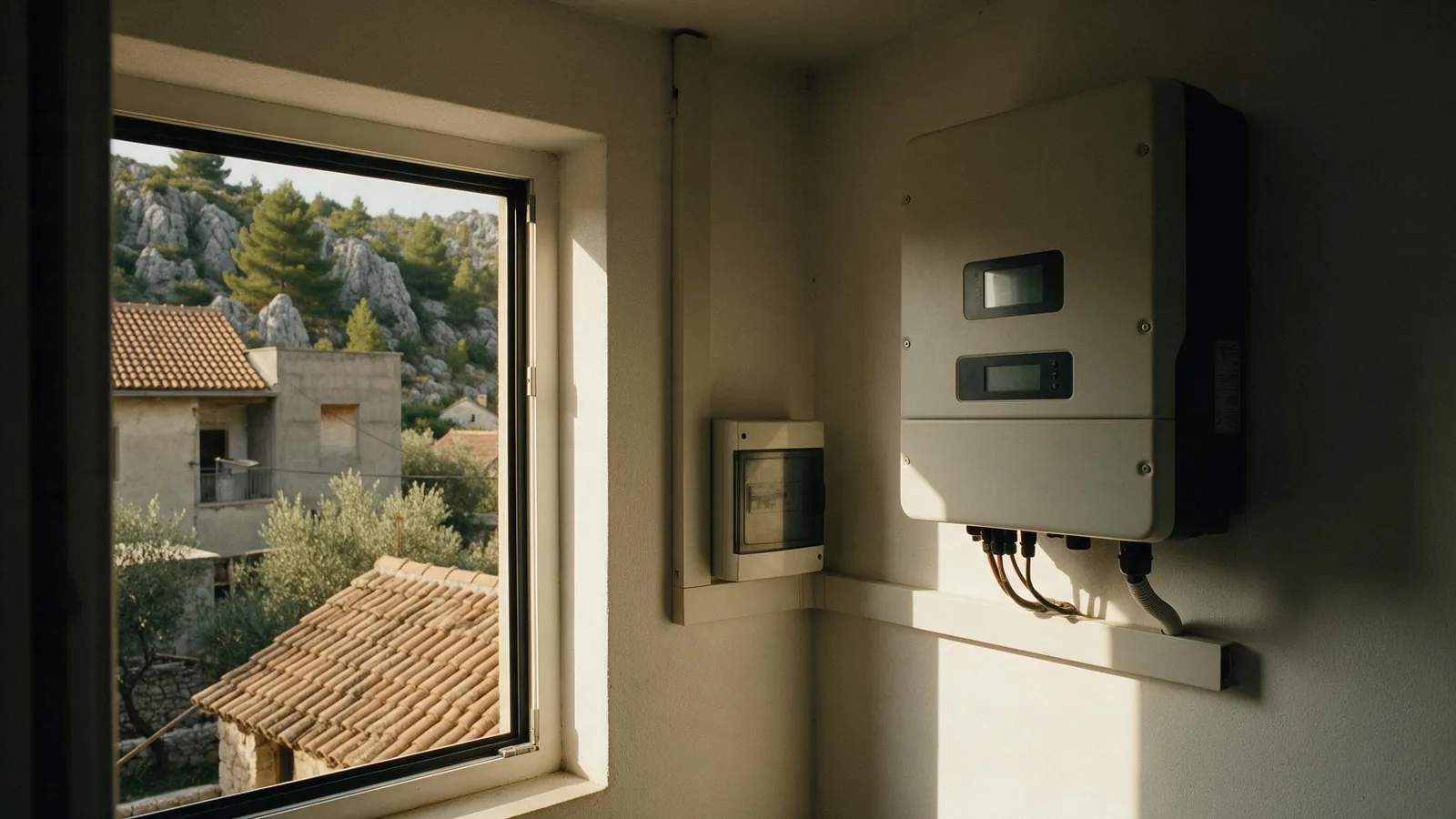
A prosumer is an end customer who produces part of their own consumption from their own plant and may feed the surplus to the grid. It is a status, not a piece of equipment: panels on a roof without it are just panels, and the surplus they make has nowhere to go.
Two counterparties, two contracts
The distribution system operator handles the connection, the meter and the technical conditions. The supplier handles the billing — what actually happens to your surplus. They are separate relationships and usually separate paperwork, so settling one does not settle the other.The order of steps
- Check your connection capacity. That, rather than the roof, usually sets the largest system you are allowed to connect.
- Request the grid connection approval from the distribution operator for a plant for own consumption. It sets out the technical connection conditions.
- Get the design done and have the work carried out by an installer working to those conditions.
- Report completion, then wait for inspection and for the meter to be replaced or reprogrammed for two-way metering.
- Sign the supply contract that governs how surplus is settled, and only then commission the system.
The order is not a formality. A system switched on before the meter is changed can register exported energy as consumed — meaning you pay for power you produced yourself. If an installer suggests running it while the paperwork catches up, that is a reason to stop.
What to have ready
- Proof of ownership, or the owner's consent if the building is not yours.
- A recent electricity bill — it carries the metering point reference and your connection capacity.
- Details of the planned plant: capacity in kW, panel and inverter types.
- For apartment buildings and shared roofs, the consent of the co-owners.
Form names, deadlines and fees differ between FBiH, Republika Srpska and Brčko District — and between distribution areas within the same entity. What is described here is the sequence, which is the same everywhere; get the exact forms and deadlines from your own operator before signing an installation contract.
Sources
- FBiH prosumer rulebook, Official Gazette FBiH 30/24checked 24.08.2026.