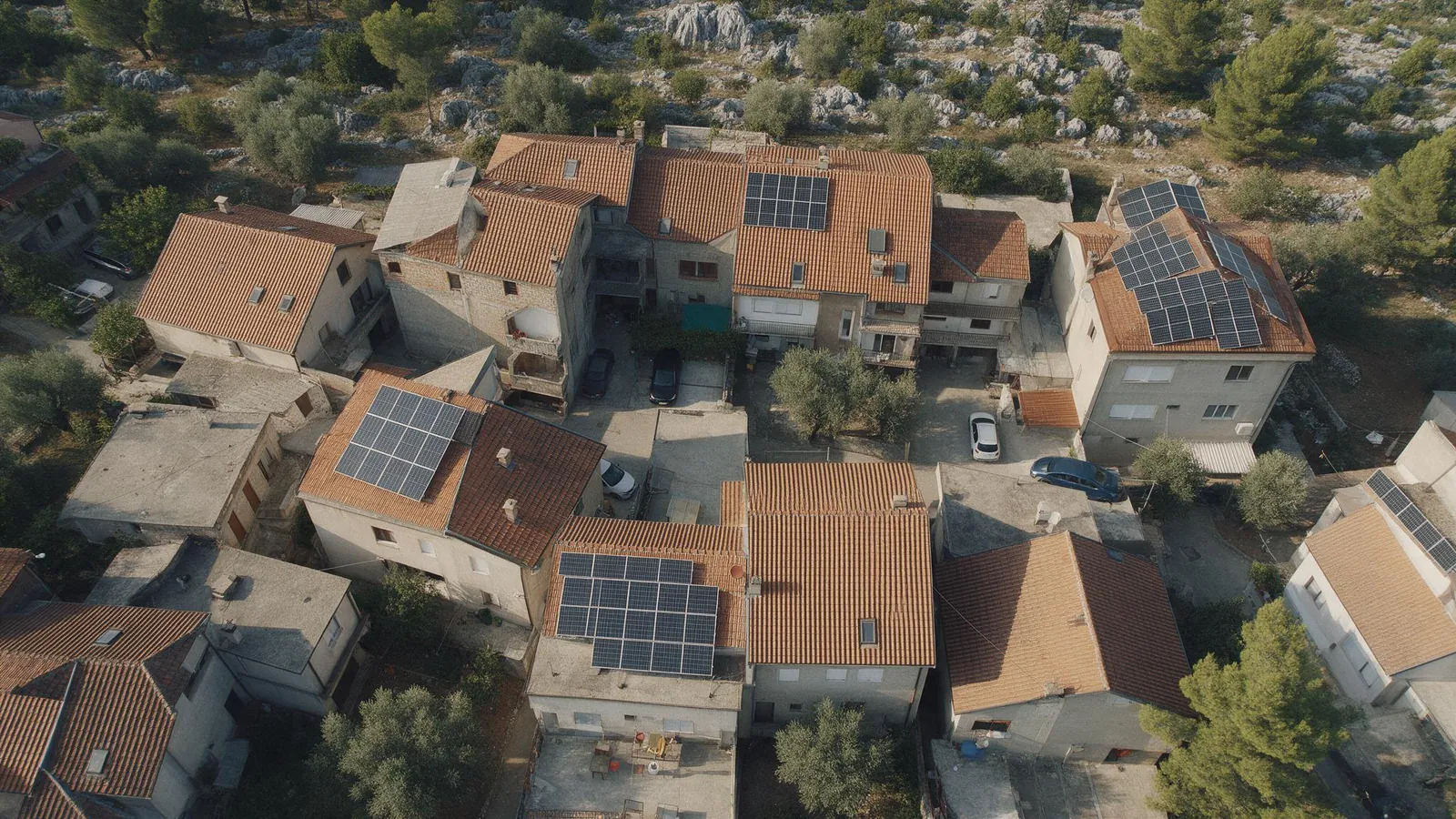
An energy community is an arrangement where several end customers generate and share electricity together — typically one plant on a shared roof or plot, with output allocated to members by agreed shares. The regulations also speak of prosumers acting collectively.
Why it is interesting
- One larger plant costs less per kilowatt than five small ones — the fixed costs are shared.
- Consumption profiles complement each other: someone is home during the day, someone in the evening, so more of the output is used on site.
- It opens solar to people with no roof of their own — flat dwellers and tenants.
Where it gets stuck
The biggest obstacle in practice is ownership, not technology. A building's roof is common property; a plant on it needs the co-owners' consent, and with it an agreement on who pays, who maintains it, and what happens when a flat is sold. Those are questions of property law rather than energy, and they get settled before an installer is called.
The framework for energy communities in BiH is still developing and differs between entities. Before committing to a shared project, check with your own distributor and supplier how allocating output across several metering points is handled in your area — the whole business case rests on it.
More realistic options today
- A shared plant for the building's own load — lighting, lift, pumps. One metering point, no allocation, and the fastest route to approval.
- A plant on a commercial roof where several businesses hold separate connections — legally simpler than a residential block.
- A balcony system for a single household, where a shared plant is not an option.