For business
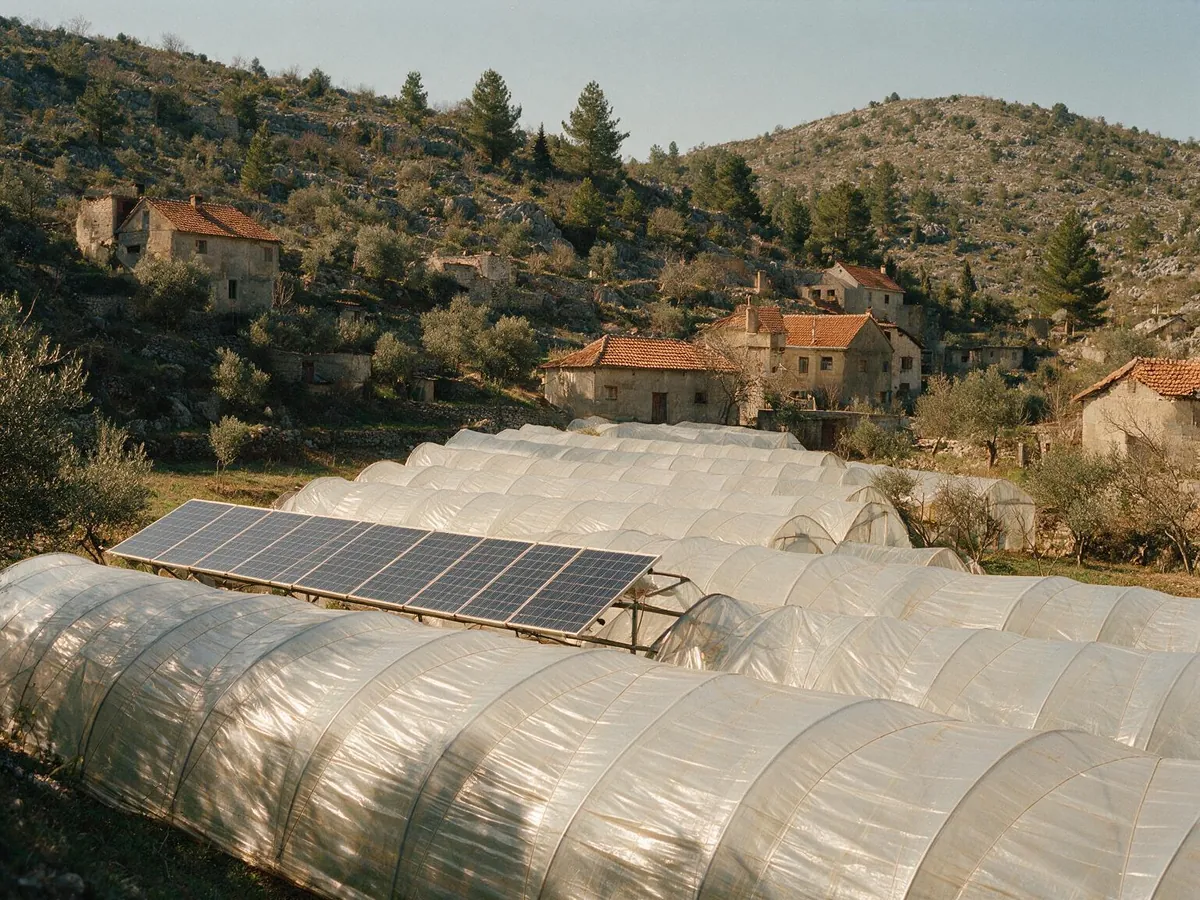
Greenhouses and polytunnels
Ventilation, screens and irrigation draw power exactly when the sun is beating down.
Excellent matchTypical size: 10–80 kWp
What your load looks like
Demand tracks sunshine almost linearly: more sun means more fans and pumps. Winter heating is the exception and needs a different source.
What that means for the system
Very high in-season self-consumption. If heating is electric, solar will not cover the winter load, and that needs saying before a contract is signed.
Sizing
Sized to ventilation and irrigation equipment. Tunnel structures usually cannot carry panels — the array goes on an outbuilding or on the ground.
Why business is different
- Commercial tariffs often bill peak demand — solar cuts that too, not just consumption.
- Daytime load means high self-consumption, and self-consumption is the only part credited at the full price.
- Industrial roofs are large, flat and unshaded, so the cost per kW is lower than on a house.
- The investment is capitalised and depreciated, which changes the real after-tax cost.
All sectors
Request a quote for your site
Describe the building and its load; the request goes to installers who do commercial work.