For business
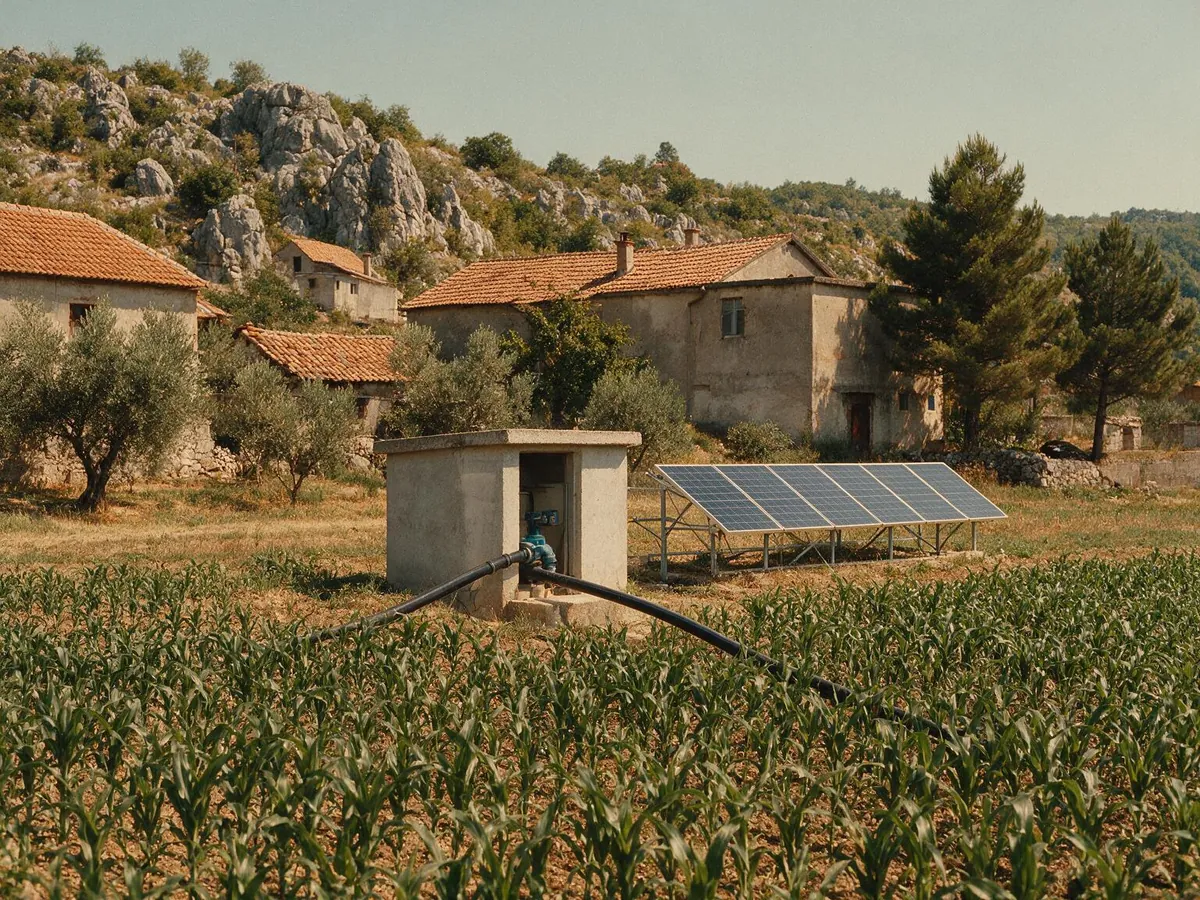
Water pumps and irrigation
A pump runs when it is sunny and dry — very nearly a perfect match to production.
Excellent matchTypical size: 5–60 kWp
What your load looks like
Demand concentrates in the warm half of the year and in daylight hours, exactly when the system produces most. In winter, when solar gives least, the pumps are mostly idle.
What that means for the system
Self-consumption is exceptionally high, often above 90%, so nearly all production is valued at the full price of power. Payback is usually shorter than for a household.
Sizing
Sized to pump rating and seasonal running hours, not to annual consumption. A battery is rarely worth it; a storage tank is a cheaper way to store the energy.
Why business is different
- Commercial tariffs often bill peak demand — solar cuts that too, not just consumption.
- Daytime load means high self-consumption, and self-consumption is the only part credited at the full price.
- Industrial roofs are large, flat and unshaded, so the cost per kW is lower than on a house.
- The investment is capitalised and depreciated, which changes the real after-tax cost.
All sectors
Request a quote for your site
Describe the building and its load; the request goes to installers who do commercial work.