For business
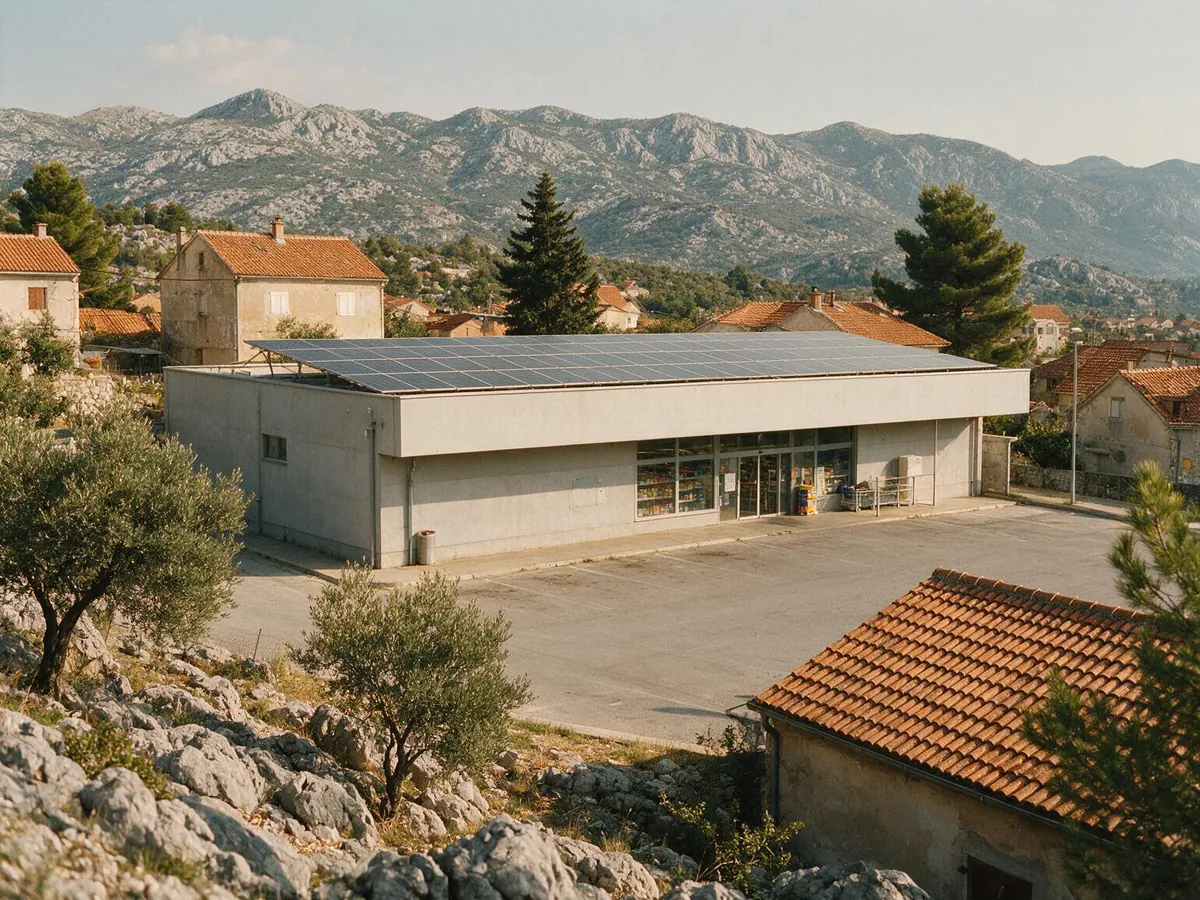
Retail and commercial premises
Opening hours line up with daylight, and the roof is usually empty and flat.
Good matchTypical size: 20–200 kWp
What your load looks like
Lighting, air conditioning and display chillers draw power right through trading hours. The summer air-conditioning peak lands in the same hours as peak production.
What that means for the system
Good self-consumption plus a lower billed peak. On leased premises, settle who owns the roof and who keeps the system before anything else.
Sizing
Sized to trading hours and refrigeration equipment. Large flat roofs usually allow more than consumption justifies — do not fill the roof without doing the sums.
Why business is different
- Commercial tariffs often bill peak demand — solar cuts that too, not just consumption.
- Daytime load means high self-consumption, and self-consumption is the only part credited at the full price.
- Industrial roofs are large, flat and unshaded, so the cost per kW is lower than on a house.
- The investment is capitalised and depreciated, which changes the real after-tax cost.
All sectors
Request a quote for your site
Describe the building and its load; the request goes to installers who do commercial work.